
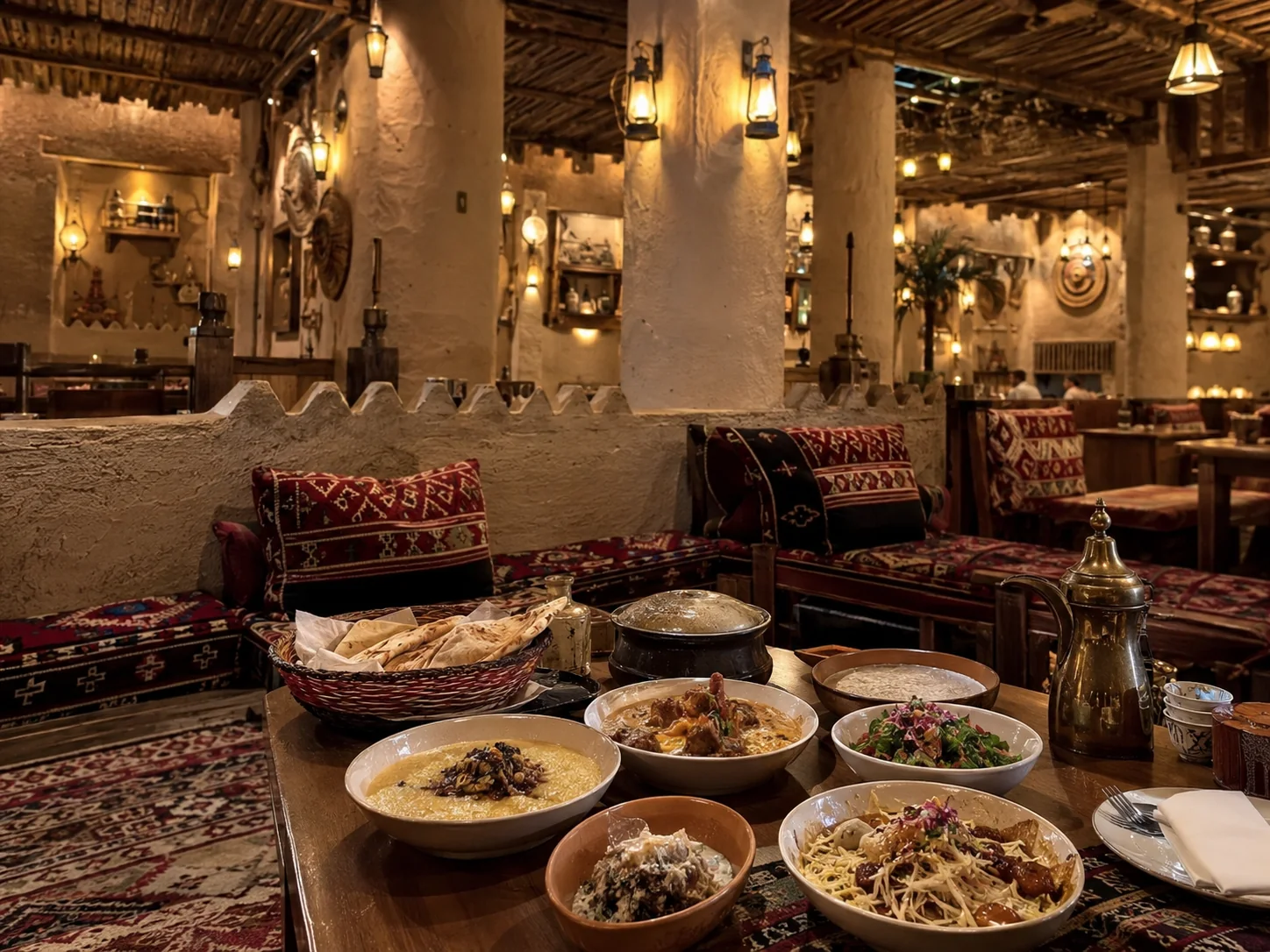
Build a meal around contrast
Najdi cooking is rooted in central Saudi Arabia. Wheat, bread and slow-cooked dishes make it especially rewarding to order for the table. Start with one wheat dish, add a contrasting main and leave room for something sweet instead of ordering several similar plates.
Three dishes to start with
Jareesh is based on crushed wheat and commonly includes yoghurt; choose it for a soft, comforting start. Marqooq brings thin dough into a stew. Qursan uses thin bread with broth and vegetables. Recipes and ingredients vary, so ask the kitchen what goes into its version.
Where to try them
Najd Village’s Takhassusi branch offers these dishes in a traditional-style setting in Al Olaya. Use its current menu and ask about sharing portions. The Culinary Arts Commission has named jareesh the national dish and marqooq the regional dish of Riyadh, making both useful starting points.
A simple order for your table
Ask how many people a serving feeds. Choose jareesh plus marqooq or qursan; add kabsa if you want rice with the meal. Consider haneeni from the dessert menu if available. This is a suggested approach to ordering, not a fixed-price set menu.
Make dietary needs clear
Do not assume a vegetable-looking dish uses vegetable stock. Ask about meat broth, dairy, wheat and any other ingredients relevant to your needs. Let the staff recommend a suitable option rather than relying on a dish name alone.
Turn it into an evening
Choose your dinner time after a visit to Sky Bridge and allow travel time. Browse the food hub for the restaurant guide and Riyadh at night for a relaxed evening plan.
Continue exploring
Frequently asked questions
What should I try first?
Start with jareesh, then try marqooq or qursan for a contrasting wheat or bread dish.
Is a Najdi sharing meal vegetarian?
Not necessarily. Ask the restaurant about the stock and other ingredients in each dish.